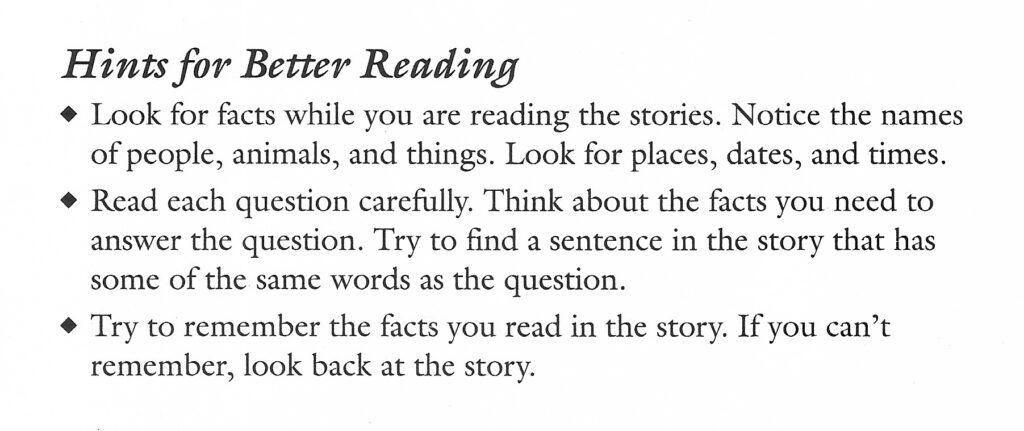
We use facts to explain ideas and opinions. Facts are often the kinds of information we use to make inferences. Being able to find facts and differentiate them from opinions, assumptions and biases is an important practice and skill. Here you’ll find some reading, practice, videos and tips about finding facts
Warm up
Facts are things like names, dates, and places. Facts can answer questions such as “Who?”, “What?”, “Where?”, “When?” and “How many?”/”How much?”. What do you see in the picture? Where was the photo taken? What kinds of trees do you see? The answers to these questions are facts. What other facts can you find in the picture?

Introduction and Practice
Read the attached document about finding facts and try the practice exercise:
Fact vs. Opinion
Using Facts to Support Opinions
When we share our opinions with others, we back them up with facts – or reasons why we think the way we do. (Hopefully those facts are accurate and truthful!) In the same way, the main idea of a paragraph or an essay is also supported by details, or the facts and information that we use to explain our idea. Try this exercise:
Tips for Reading and Test Taking